


How play-based soccer classes help 3-5 year olds build confidence
August 25, 2026
It''s a moment many parents recognize. Your kid is standing just outside the group, watching. They''re curious, but not quite ready to jump in.
At this age, confidence doesn''t come from knowing exactly what to do; it comes from feeling comfortable enough to try. That''s why play-based soccer classes can be such a good fit for 3-5-year-olds. They create a space where kids can move, explore, and ease into participation without pressure.
Over time, small steps like joining a game, kicking the ball, or just following along start to build something bigger.
Confidence looks different at 3–5 years old
Between ages 3 and 5, kids are still learning how to participate, not just in sports, but in group settings overall.
They''re figuring out how to:
Follow along with simple directions
Stay engaged in an activity
Try something new without stepping back
Because of that, progress often shows up in subtle ways.
What beginner soccer classes for kids look like
Beginner soccer classes for kids shouldn''t have kids standing in lines or repeating drills. Instead, kids move through activities that keep them engaged from start to finish. A coach introduces a simple setup, and kids learn by doing rather than listening to complex instructions for long periods.
More movement, less waiting
In Pedalheads classes, each kid has their own ball, which means they''re always involved and never waiting for a turn.
Learning through simple, active play
Instead of being told exactly how to control the ball, kids learn by moving with it.
For example, they might:
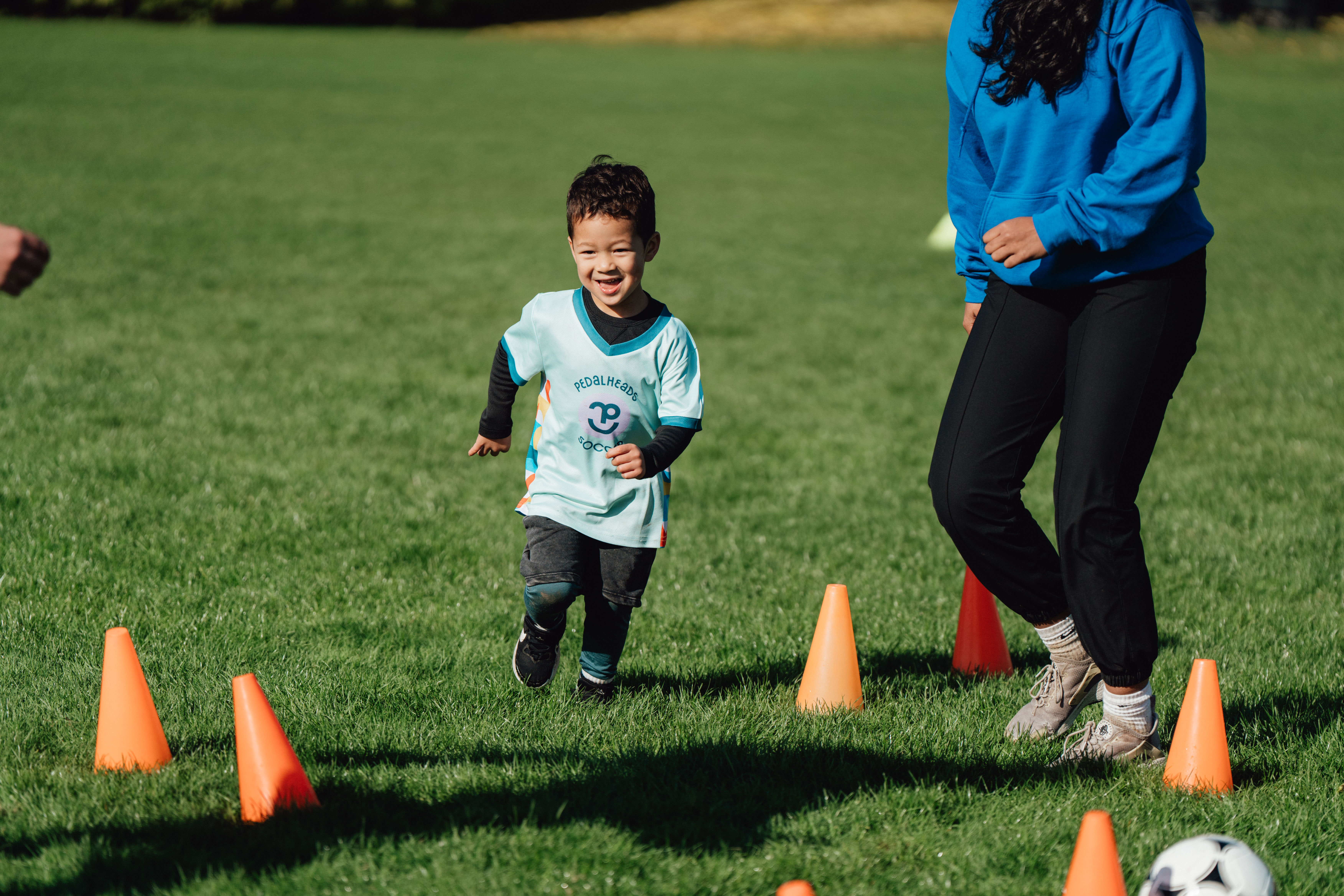
Move through a simple course
Change direction around markers
Stop and start based on a cue
These small, active moments help skills build naturally, without overthinking.
Meet Ziggy and the power of play
Each kid has their own ball featuring the smiling face of the Pedalheads Soccer character, Ziggy, who helps them connect with the game right away.
Our pro coaches use Ziggy to guide simple, playful activities that turn learning into something kids can imagine. They might be off on an adventure, outsmarting a sleepy lion with a clever move or making their way down a path in Candy Land.
To the coaches, it''s purposeful skill-building, but to them, it feels like play.
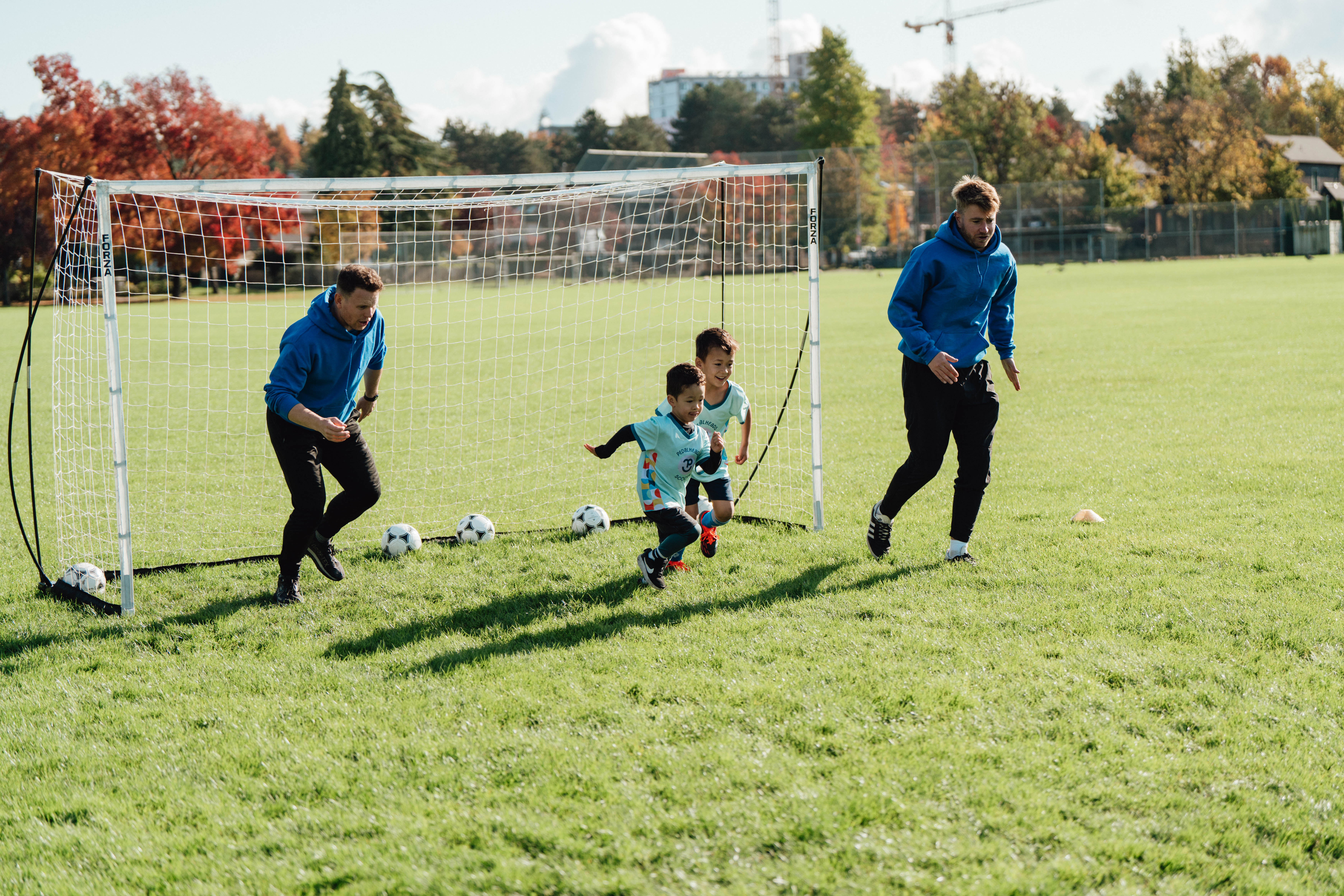
How play-based soccer builds confidence over time
Kids build confidence and overcome fears when they have repeated chances to try something, adjust, and try again.
1. It starts with movement
Early activities focus on simple actions, like kicking, stopping, or moving with the ball. These are easy for little ones to accomplish, which lowers hesitation and helps kids get involved.
Because every kid has their own ball, they get more chances to practice right away, instead of waiting for their turn.
2. Skills develop through action
Instead of long explanations, kids learn by repeating movements in different situations. Running, turning, and kicking become familiar because they''re used again and again in different ways.
Coaches often pair movement with simple songs or cues, which helps kids remember what to do without overthinking it. The rhythm keeps them engaged and makes the skills easier to recall.
3. Repetition builds comfort
When kids recognize an activity or movement, they''re more likely to participate. That familiarity removes uncertainty, which makes trying again feel easier.
Even when the activity changes slightly, the core movement stays the same, so kids build confidence without feeling like they''re repeating drills.
4. The group environment becomes familiar
At first, being part of a group can feel like the biggest challenge. Over time, kids get used to the rhythm of the class, where to stand, when to move, and how to follow along with the others. That comfort carries into everything else they do.
Why this approach works well for shy kids
Some kids need a little more time to settle in, and there''s absolutely nothing wrong with that.
Play-based soccer lessons for 3–5 year olds focus on movement and play and not performance, making kids feel more engaged, no matter their level. A kid who starts by watching often ends up joining in, not because they''re told to, but because they feel more comfortable in their environment.
Soccer activities for 3–5 year olds that build confidence
We use play-based learning to take kids on imaginative adventures with their ball. Activities are designed to keep kids engaged, moving and interacting with the ball without overwhelming them.
You might see kids:
Using a pull back to feed the hungry frogs
Trying out a scissors skill to tangle up the silly octopus
Changing direction with the ball to outsmart a sleeping lion
Dribbling through a simple path of cones to pay a visit to candyland
We also pair the kids'' movement with song, making it easier to remember concepts and help those skills really stick.
What parents may notice over time
Soccer is a great first sport for young kids. Progress often follows a pattern, even if it looks different from one little one to another.
Early on
Staying close to a parent or coach
Watching before joining
Trying a movement once or twice
After a few classes
Participating in parts of activities
Staying engaged for longer stretches
Showing more willingness to try
As confidence builds
Joining activities independently
Moving more freely with the ball
Feeling comfortable in the group setting
The changes are gradual, but they''re consistent.
Is your kid ready for soccer?
You don''t need much to get started. If your kid enjoys moving, kicking a ball, or being around other kids, that''s usually enough.
There''s no need for prior experience, and there''s no expectation that they''ll be confident right away. The goal is to give them a space where they feel supported, can get comfortable, and can build from there.
Why Pedalheads Soccer uses a play-based approach
Pedalheads Soccer is designed around how young kids naturally learn. The focus is on helping kids stay engaged long enough to build familiarity with movement and the ball.
That means:
Every little soccer star has their own ball, so there''s no waiting and more time to practice
Ziggy helps bring each activity to life, turning simple movements into playful, engaging experiences
Small groups allow for more guidance and support
Pro coaches use songs, movement, and imagination to keep kids involved and learning without pressure
Activities are structured, but still feel natural and engaging
The fun that they have in class and those proud "I DID IT!" moments along the way are what make them excited to come back week after week!
Ready to try play-based soccer classes?
If your little one is ready to get moving and explore something new, play-based soccer is a simple way to start.
You can find a class or camp near you and choose an option that feels like the right fit for your kid.

FAQs
What age can kids start soccer classes at Pedalheads?
Pedalheads Soccer programs start as early as age 2. For 3–5-year-olds, classes are designed to match their stage, with simple activities that help them get comfortable moving, playing, and learning in a group.
Do parents stay at a first soccer class?
You''re welcome to stay and watch from the sidelines, especially during your child''s first class. While parents don''t join activities on the field, our coaches are experts at helping kids feel comfortable, build confidence and jump into the fun. Most children settle in quickly once the games and adventures begin!
Do kids need any soccer experience before joining?
Nope, no experience is needed! Classes are designed for beginners, and kids are guided through each activity step-by-step so they can learn at their own pace.
Do kids play real soccer games in these classes?
At this stage, gameplay is simple and guided. Kids are introduced to basic concepts through small, structured activities that help them understand movement, space, and working with others.
What clothes should kids wear to soccer class?
Kids should wear comfortable clothes they can move around in, along with any shoes that are closed-toed and comfortable. The goal is to keep things simple so your kid can focus on moving and playing.
What if my kid is shy or nervous?
That''s very common, especially at this age. Kids are encouraged to join in at their own pace, and many start by watching before slowly participating more. Our pro coaches help make the space feel comfortable, so your little one can ease into it when they''re ready.
Share:

