


How to choose the right soccer class for your 3, 4, or 5 year old
August 26, 2026
Choosing a soccer class for your little one can feel like a big decision, especially when there are so many options available. You might be wondering what actually makes one program a better fit than another, or how to know if your child is ready to join a class at all.
At Pedalheads, our soccer classes for 3, 4, and 5 year olds are designed to make that first experience feel simple, positive, and fun. The goal isn’t perfection. It’s helping kids feel comfortable, stay active, and build confidence from the very beginning.
Age, attention span, and readiness
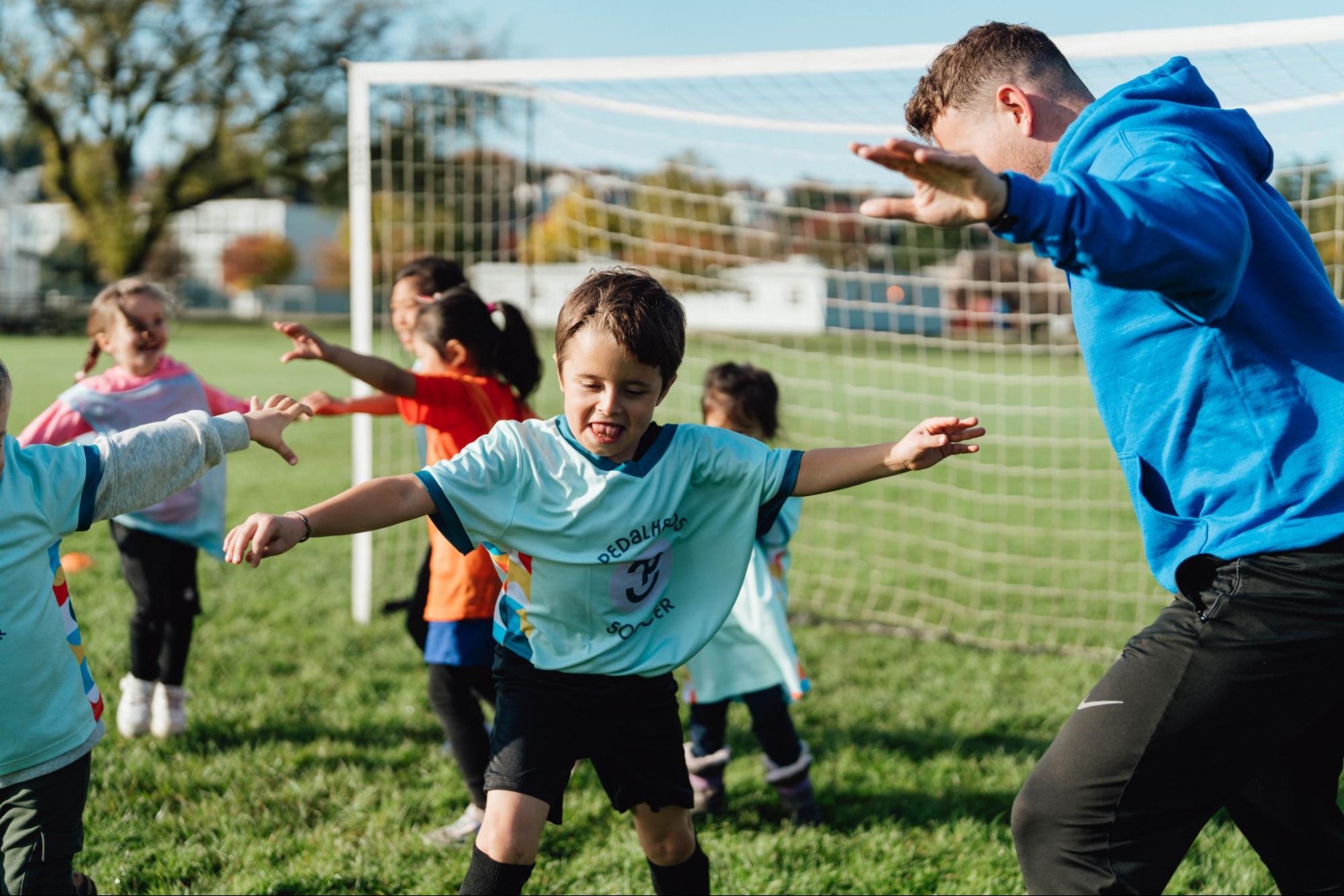
Every child develops at their own pace, but kids ages 3 to 5 tend to follow a similar pattern when it comes to group activities.
At this stage, they’re learning how to:
Follow simple instructions
Participate in group settings
Stay engaged for short periods of time
Try new movements with encouragement
Signs your child might be ready
Your child may be ready for a soccer class if they:
Enjoy running, playing, and being active
Show curiosity about balls or simple games
Can follow basic directions (even with reminders)
Are comfortable being around other kids
There’s no perfect starting point. The right program will meet your child where they are and help them grow from there.
Play-based coaching
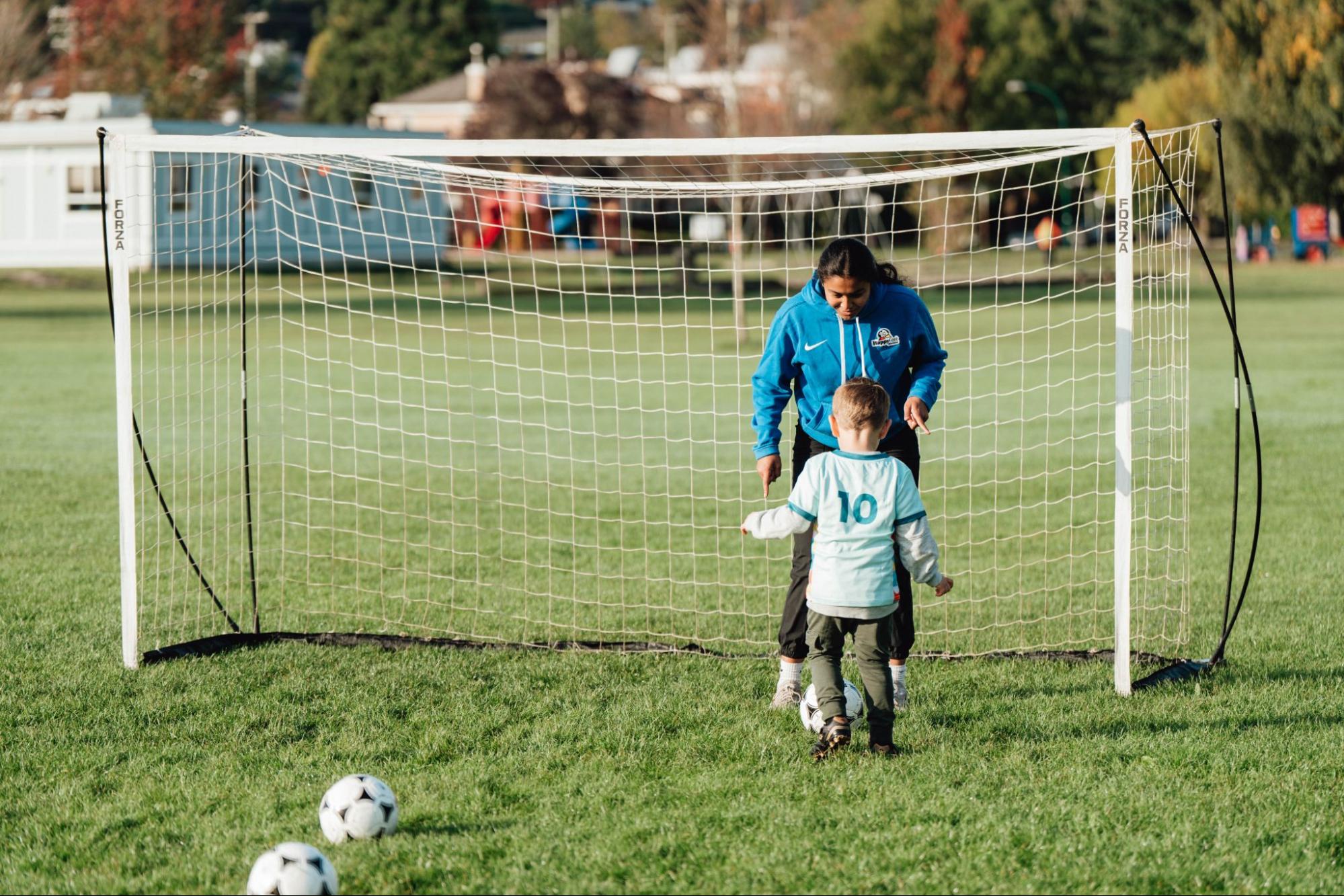
One of the most important things to look for in preschool soccer is how the class is actually taught. At ages 3–5, kids don’t learn through drills or repetition alone. They learn through movement, games, exploration, and above all, fun.
What play-based coaching looks like
Instead of standing in lines or repeating the same action over and over, every kid gets their own ball and are encouraged through imaginative stories and songs that transform learning into an adventure.
You might see kids:
Using a pull back to feed the hungry frogs
Trying out a scissors skill to tangle up the silly octopus
Changing direction with the ball to outsmart a sleeping lion
Dribbling through a simple path of cones to pay a visit to candyland
These activities may look like play, but each one introduces key soccer skills in a way that feels natural. Play-based soccer activities help kids stay engaged longer and feel more confident trying new things.
Why ball touches matter
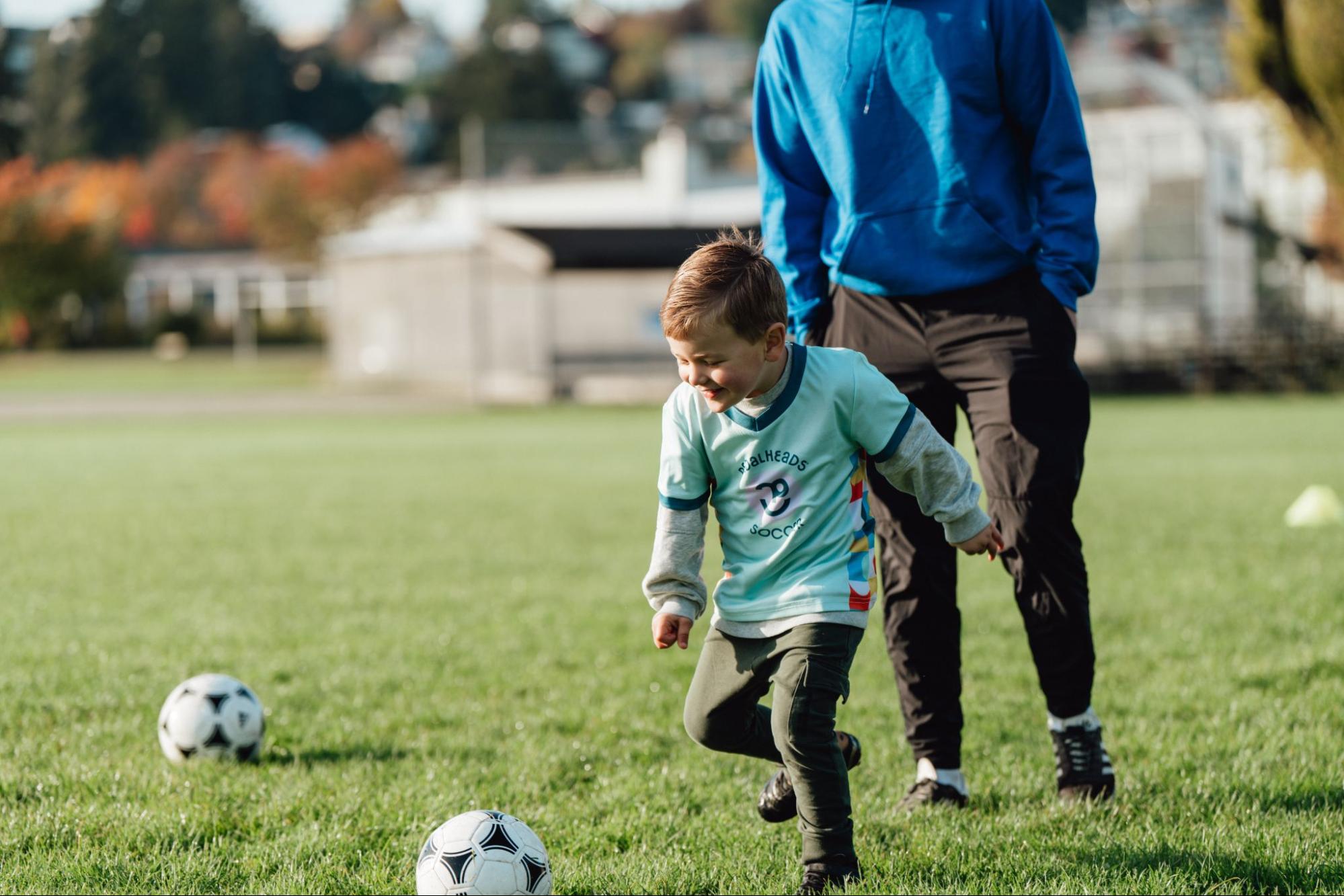
At this age, repetition builds confidence. The more time kids have with the ball, the more chances they have to kick, stop, and dribble, and ultimately, become more comfortable.
That’s why every child gets their own soccer ball. Our coaches make sure every kid gets hundreds of hundreds of touches on the ball in each class, keeping them active and engaged throughout the session.
Class size and ball touches
Class size plays a big role in how much your child actually learns during a session.
In smaller classes:
Coaches meet kids where they’re at, no matter the skill level
Coaches support kids with individual attention and skill development
Kids have less ‘noise’ to compete with and fewer distractions
Kids feel more comfortable participating
In larger groups, it’s easier for kids to lose focus or feel lost.
Weekly classes vs week-long camps
Another important decision is the type of soccer program you choose.
Weekly soccer classes
Great for building routine and familiarity
Skills develop gradually over time
Ideal for kids who benefit from consistency
Soccer camps & classes for kids
Offer more repetition in a shorter period
Help kids gain confidence quickly
Great for spring break or summer schedules or active kids
Many families start with weekly classes, then explore kids soccer camps as their child becomes more comfortable.
Both options are structured, skill-building, and create “I DID IT!” moments.
Things you should know
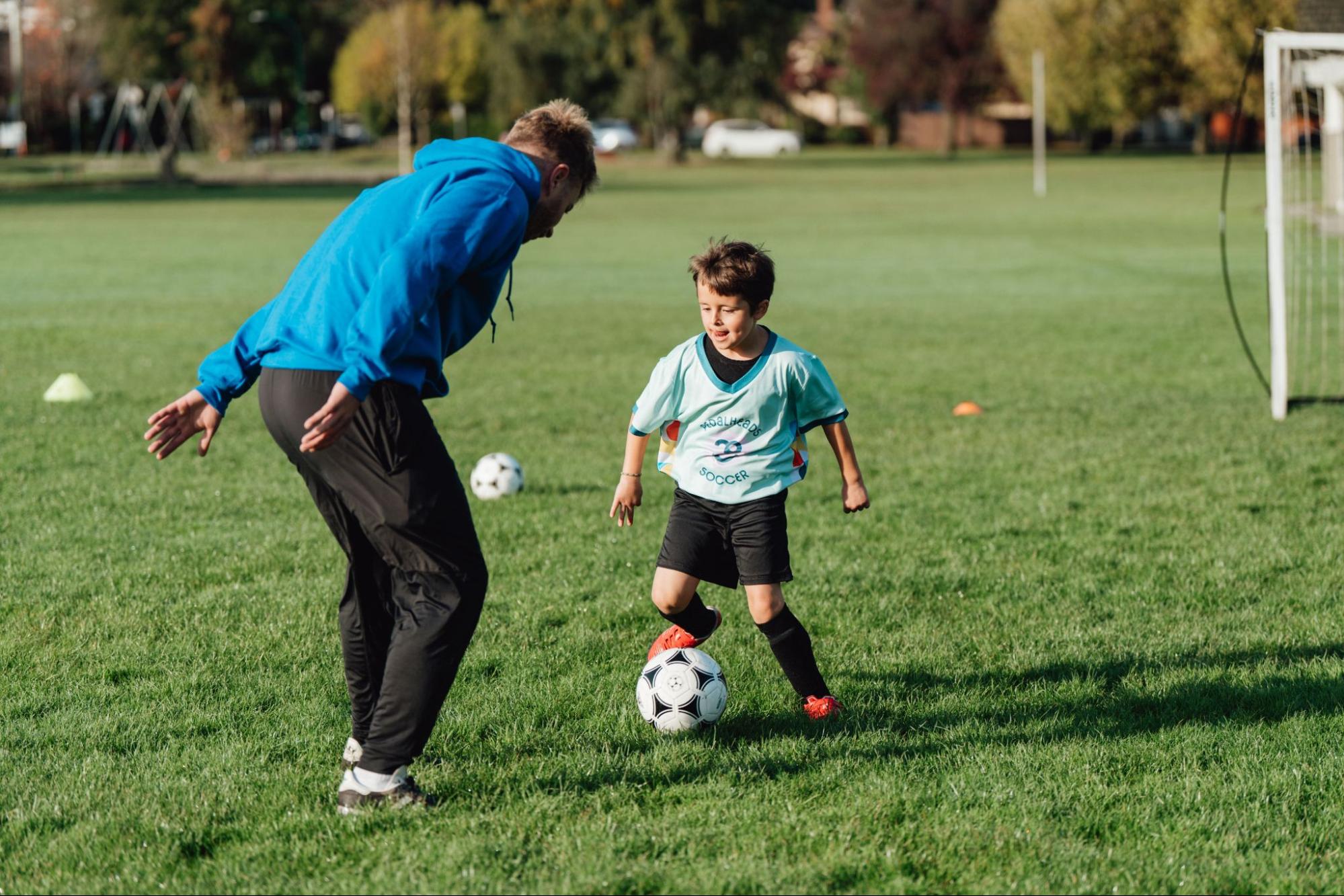
Before choosing a soccer program, it helps to understand how classes are structured and what your child can expect.
What a typical session looks like
Every session is packed with fun songs, imaginative stories, and engaging activities that naturally introduce foundational soccer skills. Through guided play, kids build confidence, coordination, and a love for the game in a supportive environment. The focus is on participation, exploration, and learning through play, rather than strict drills or competition.
Group size
Class sizes are kept small so each child gets attention from the coach. Smaller groups also give kids more opportunities to stay involved and practice skills.
How coaches support shy or new participants
Coaches use encouragement, clear instruction, and familiar routines to help kids feel comfortable. Most children warm up quickly once they feel included and supported in the group. That’s where the fun starts!
What skills kids start learning first
Early sessions focus on basic movement, listening, and simple ball interactions like kicking and stopping. These small steps help build confidence and prepare kids for more structured play.
What makes a soccer class feel like the right fit
The right soccer class doesn’t just teach skills. It helps your child feel comfortable, engaged, and excited to come back.
You’ll know it’s working when your child:
Looks forward to class
Talks about what they did
Starts trying new movements on their own
Builds confidence over time
That’s where real progress begins.
Find soccer classes near you and get started today
If you’ve been searching for kids soccer lessons for 3-5 year olds, finding a program designed for this group makes a big difference.
Our soccer classes are built to support early learners through play, movement, and encouragement. Whether you’re looking for weekly lessons or soccer camps & classes for kids, we make it easy to get started.
Find a program near you and give your child a place to stay active, try something new, and build confidence.
FAQs
What should I look for in a soccer class for preschoolers?
Look for small class sizes, simple structure, and a play-based coaching style. These help kids stay engaged and feel comfortable while learning.
How important is class size in early soccer?
Very important. Smaller groups mean more attention from coaches and more opportunities for kids to practice skills with the ball.
Should I choose a weekly class or a camp?
Weekly classes are great for routine and gradual learning. Camps provide more repetition in a shorter time and can help kids build confidence quickly.
How do I know if a soccer class is the right fit for my kid?
If your child feels comfortable, stays engaged, and enjoys coming back each week, it’s a good sign the program is the right match.
What is the best age to start soccer lessons?
Many kids are ready to start soccer between the ages of 3 and 5. At this stage, they’re developing coordination and can begin following simple instructions, making it a great time to introduce structured, play-based soccer classes.
Some programs offer introductory Parent & Tot levels where kids as young as 2 can take their first steps onto the field, building confidence, coordination, and a love of movement through fun, play-based activities.
What if my child is shy or hesitant in group settings?
That’s very common at this age. A well-structured class uses simple routines, encouragement, and familiar activities to help kids feel comfortable. Most children warm up quickly once they feel supported and included.
Do parents stay at the first soccer class?
Some parents choose to stay and watch from the sidelines, especially during their child’s first class. While parents don’t join activities on the field – excluding Parent & Tot levels – our coaches are experts at helping kids feel comfortable, build confidence and jump into the fun. Most children settle in quickly once the games and adventures begin!
Share:

